"Local and international artists are donating their work to a charity art auction in support of Save the Forest Campaign. The event is at the AXO Gallery in Leith between 13 and 15 May. AXO owner Sarah Wilson said: "By bidding in this auction, ..." [Read Full Article]
Published By: The Guardian
On: 04/06/11
Website: http://www.guardian.co.uk/
Looking for original art? Visit Artistically Connected today!

Showing posts with label arts. Show all posts
Showing posts with label arts. Show all posts


Sid Vicious' Art To Hit The Auction Block
"These pictures were all done when he was at art college, aged 15 or 16, and were probably part of his course work. "They are watercolours or sketches, and show a completely different side of the Sid Vicious people think of now. ..." [Read Full Article]
Published By: Contactmusic.com
On: 04/06/11
Website: http://www.contactmusic.com/
Looking for original art? Visit Artistically Connected today!
Published By: Contactmusic.com
On: 04/06/11
Website: http://www.contactmusic.com/
Looking for original art? Visit Artistically Connected today!
Artprice: the 2010 Art Market Annual Report - China Winner of the Past Decade
"Over the last 10 years, China jumped from ninth place to first place in 2010, becoming the world's largest auction marketplace for Fine Art and overtaking the United States and the UK, the grand masters of the market since the 1950s. ..." [Read Full Article]
Published By: PR Newswire
On: 04/05/11
Website: http://www.prnewswire.com/
Looking for original art? Visit Artistically Connected today!
Published By: PR Newswire
On: 04/05/11
Website: http://www.prnewswire.com/
Looking for original art? Visit Artistically Connected today!
"Through the Garden Gate" Art show opening this week at Museo Gallery in Langley
"Museo Gallery on First Street in Langley this Saturday night, April 2nd, from 5-7 pm for the opening party of this spring's not-to-be-missed art show for gardeners. Owner Sandra Jarvis has assembled a collection of art pieces both practical and ..." [Read Full Article]
Published By: Valerie Easton, Plant Talk
On: 03/30/11
Website: http://seattletimes.nwsource.com/
Looking for original art? Visit Artistically Connected today!
Published By: Valerie Easton, Plant Talk
On: 03/30/11
Website: http://seattletimes.nwsource.com/
Looking for original art? Visit Artistically Connected today!
Nigerian art market suffocates artistic creativity says Nnenna Okore
[caption id="" align="alignright" width="300" caption="Image via Wikipedia"]
 [/caption]
By McPhilips Nwachukwu
Educated at the University of Nigeria, Nsukka, Nigeria, Nnenna Okore, an Assistant Art Professor presently the Chair of Art at North Park University, Chicago has emerged as one of the most significant visual art voices of her generation.
Sourcing her compositional materials from clay, recycled paper and other discarded materials, Okore has imbued in her art a new energy that bristles with the aesthetics of fashion, climatic upheavals among other socio-cultural issues.
According to an internet source profile, “Okore enriches her work with layers of meaning through familiar processes. Both in her home country Nigeria and United States, she relies on the use of flotsam or discarded objects, which are transformed into intricate sculpture and installations through repetitive and labor-intensive techniques.”
A widely exhibited artists both in Nigeria and oversears, the United States based artist also happens to be among the privileged artists, whose works met the ArtHouse Contemporary auction currently going on Lagos.
In this e- interview, Okore, who has participated in all the three editions of the auction shares her experience about the auctions and as well, talked about the emerging African art market. Excerpt.
Nnenna can you tell us about yourself?
I am an artist and an art professor. I chair the Art Department at North Park University, Chicago and have been widely exhibited in numerous international art galleries and museums. My most recent outings this year were at the Blachere Foundation Art Center, France and the 29th Sao Paulo Biennial, Brasil.
I spent over twenty years living and schooling in Southeastern Nigeria prior to relocating to the United States, which explains why most of my works are deeply rooted in my Nigerian sensibilities and experiences. Generally speaking, my works are inspired by stunning cultural, natural and architectural forms. I employ a wide range of mediums, including but not limited to clay, recycled paper, rope and wax.
You have featured in the three editions of Arthouse Contemporary organised auctions. How would you score the performance?
Arthouse has done well in promoting and marketing works selected for their auctions. What sets them apart from others, I believe, is their ability to create and set high standards, which are reflected in the organization, venue, catalogue, etc. They’ve undoubtedly increased visibility for many artists and more importantly, brought greater value to works by Nigerian artists.
What would you say are the high points of the exercise?
One of the high points of the auctions has been the exposure of Nigerian artists to an international audience, which I think will force the existing commercial art centers to treat their artists better and reckon with the professional standards set by Arthouse.
Do you think that auctions meet the conditions required of the practice in the global art market?
I can’t speak much to the practice, having not had much direct experience with auctions myself. But from the much I know, the Arthouse auctions are generating wider national and international interests, which can be viewed as a positive step towards positioning African artists on the global scene.
What is your candid opinion about the second and third tier visual art markets in Nigeria?
Do you mean the smaller galleries and craft stores?
Well,if you put it that way ?
I think the Nigerian art market, perhaps not intentionally, has generally controlled and suffocated artistic creativity for too long; largely because they have had to sustain and market whatever art styles or mediums that sell well.
As a result, artistic and conceptual originality is almost nonexistent in the Nigerian art culture. Struggling artists are forced to create and sell what these commercial galleries dictate. There’s no question that these dead-end practices have suppressed the progressive art growth in Nigeria, but I am optimistic that the new trends of interests and international visibility enabled by art centers like, CAA and Arthouse will provide artists with a better platform to compete on a global scale.
Do you think that the present economic climate supports this emerging market?
Who is to say, especially when art sales in the global market have continued to surge. I don’t know how the Nigerian economy will affect this season’s auction, but judging from the outcome of the last Arthouse auction and their ever increasing reputation, I believe they will fare well.
Recently, the national gallery of art in Ngeria proposed a bill to the National Assembly requesting that certain royalties be paid to artists over the acquisition of their works by buyers. What is your take on this move?
I have not followed this too closely, but I can say this: It seems like a good idea, especially in the light of increasing value for art and incuring a better future for the Nigerian artist. However, it’s unclear to me how the royalty will be applied and sustained. With the exception of ‘resale or reprint royalties’, I am not aware that creative artists are entitled to lifelong royalty right like musicians. I think it will be challenging to implement or monitor it since we don’t have an institutionalized art industry and my assumption is that there aren’t high occurrences of resale.
Is this request the global practice?
As far as I know, many European countries as well as Australia have legislated the resale royalty rights; but it’s not as popular a practice as one might imagine. The United States, (with the exception of the state of Califonia), Canada, and New Zealand have yet to adopt any binding act. I think the pros and cons have to be considered carefully to ensure that artists will benefit from it.
If a buyer of work at an auction for instance, is expected to pay royalties on such works. Don’t you think such a measure will frustrate the growth of the emerging art market?
It could, again depending on the terms of the royalty.
Finally, how do you see the future of African arts in the global arts market?
In all fairness, I don’t think African artists in general have done too badly in the global market. Africans, particularly from North, Central, Eastern and Southern Africa had enjoyed visibility and global attention for many decades and for good reasons: government support and international exposure. I believe Nigerian and West African artists, on the other hand, are beginning to make remarkable advancements on the international stage, and will become a competing force in the near future.
This article is from: http://www.vanguardngr.com/2010/11/nigerian-art-market-suffocates-artistic-creativity-says-nnenna-okore/
Mixing Old And New
The idea of mixing the old with the new can be hard to get your head around but when done right you are left with a unique space with tones of personality...
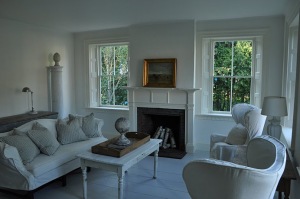
The shock of the new: vibrant modern artwork hung on a sombre dark panelling interior produces a joyful, sensuous and surprising effect. The shock of the old (above): this dated oil landscape creates impact on the white wall in this otherwise modern livingroom.
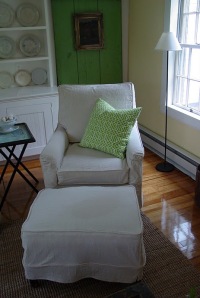
Cool interiors, big super modern art. That's one look. Another look of distinction and personality is to do the unexpected. Work with opposites in the way vintage clothing can work with Chanel. So don't dismiss that inherited oil painting that you like but don't think will "work" (above) and similarly, play around with contrast and the same for if you live in an old house but want to include modern art.
The shock of the new: vibrant modern artwork hung on a sombre dark panelling interior produces a joyful, sensuous and surprising effect. The shock of the old (above): this dated oil landscape creates impact on the white wall in this otherwise modern livingroom.
Cool interiors, big super modern art. That's one look. Another look of distinction and personality is to do the unexpected. Work with opposites in the way vintage clothing can work with Chanel. So don't dismiss that inherited oil painting that you like but don't think will "work" (above) and similarly, play around with contrast and the same for if you live in an old house but want to include modern art.
Tips For Pricing Your Art
Often I am asked for help when it comes to pricing art. This is a tricky process because there are so many different pricing methods not to mention the emotional attachment to your creation that has to be considered. It is important to remember that your goal is to set a price that strikes the consumer as fair, at the same time enticing him/her to buy. Here are a couple of methods to consider for pricing your work, but I encourage you to do a little research and figure out which one is best for YOU.
Time and Overhead Pricing
In order to survive as a full-time artist with this method, the general rule of thumb is to create five pieces a month. This doesn’t mean you have to sell all five pieces each month but you need to build a stock so your clients have a variety to choose from. In this method you have to consider your costs and time required to create the piece and add a 10% profit margin. If it takes you a month of working on one original piece (eight hours a day) you should probably consider getting involved in the print market and not focus on selling the originals for this method.
Market-Value Pricing
Another method used to calculate price is to go into the actual marketplace and see what other artists with the same type of background and similar art (dimensions, media, content) are selling their art for. Make sure you check to see if they are actually selling, they may be charging too high and not selling a thing. The best way to do this is to go to an exhibition and see for your self.
Perceived-Value Pricing
Perceived value is based on the value in the minds of buyers and not on the basis of what it costs you produce the piece. This is harder to pinpoint but observation with trial and error (and a bit of patience) will get you to your price range.
My Notes
Consider combining all of the methods - covering your costs while meeting your market expectations and the buyer’s perceived value.
As a potential buyer, I might think something is wrong with a piece, or wont value it as much, if the cost is less than what I feel is its fair market value.
Before long, an artist who keeps labor records on each piece can learn to estimate quite accurately the approximate number of hours and cost of materials needed to produce any given work. This information can be useful for commission requests.
To study perceived value, you need to be on site at your exhibit. Study how people are reacting, what they are saying, prices, ect. What are they buying? Why are they buying? Why are they not buying?
Your prices should not vary from place to place (not just in your area but anywhere you are selling).
Do not sell anything you wouldn't want to be known as your work. It may reach the wrong hands and bring you bad publicity some day. Be proud of every piece you sell.
Gradual increases in price is the way to go. Collectors like to see a little movement in an artist's prices over the years.
Buyers expect that the larger the work is the more expensive it should be. I know a lot of artist do not understand this because miniatures require a lot of attention to detail but you have to always keep in mind the way buyers think.
MOST IMPORTANTLY: you have to feel comfortable with the price you set.
Time and Overhead Pricing
In order to survive as a full-time artist with this method, the general rule of thumb is to create five pieces a month. This doesn’t mean you have to sell all five pieces each month but you need to build a stock so your clients have a variety to choose from. In this method you have to consider your costs and time required to create the piece and add a 10% profit margin. If it takes you a month of working on one original piece (eight hours a day) you should probably consider getting involved in the print market and not focus on selling the originals for this method.
Market-Value Pricing
Another method used to calculate price is to go into the actual marketplace and see what other artists with the same type of background and similar art (dimensions, media, content) are selling their art for. Make sure you check to see if they are actually selling, they may be charging too high and not selling a thing. The best way to do this is to go to an exhibition and see for your self.
Perceived-Value Pricing
Perceived value is based on the value in the minds of buyers and not on the basis of what it costs you produce the piece. This is harder to pinpoint but observation with trial and error (and a bit of patience) will get you to your price range.
My Notes
Consider combining all of the methods - covering your costs while meeting your market expectations and the buyer’s perceived value.
As a potential buyer, I might think something is wrong with a piece, or wont value it as much, if the cost is less than what I feel is its fair market value.
Before long, an artist who keeps labor records on each piece can learn to estimate quite accurately the approximate number of hours and cost of materials needed to produce any given work. This information can be useful for commission requests.
To study perceived value, you need to be on site at your exhibit. Study how people are reacting, what they are saying, prices, ect. What are they buying? Why are they buying? Why are they not buying?
Your prices should not vary from place to place (not just in your area but anywhere you are selling).
Do not sell anything you wouldn't want to be known as your work. It may reach the wrong hands and bring you bad publicity some day. Be proud of every piece you sell.
Gradual increases in price is the way to go. Collectors like to see a little movement in an artist's prices over the years.
Buyers expect that the larger the work is the more expensive it should be. I know a lot of artist do not understand this because miniatures require a lot of attention to detail but you have to always keep in mind the way buyers think.
MOST IMPORTANTLY: you have to feel comfortable with the price you set.
The Not So Starving Artist
Artists are not “destined to be starving”. If you're an artist, you can actually make money from your art, feel good about it, and build up a following to support your independent career. So why do so many artists struggle in their quest to earn a living through their art? The good news is that most artists struggle NOT because they lack talent but because they have not been trained to represent themselves, to build a customer base, and to actually sell their great artwork. Sound difficult? In the past this was very challenging for most of us, but now a days it has become pretty easy and cost effective.
Just like selling anything else, you have to build your brand. Building a brand helps you to get a following for your work, sparks interest and keeps you top of mind. You can do this by engaging in social media (Facebook, Twitter), participating in shows/events and working with art community organizations. Basically, getting your name and your art in as many channels as possible to create that conversation of who you are and what your art stands for.
As an artist, making the decision to sell your art online could be the best decision you’ll ever make. Why you may ask? Well, when people see something they like, they search for it on-line to find out more information. And if your not there when they search, they will come across someone who is, which means your missing potential sales. The art market is booming and with the Internet you can put your artwork in front of thousands, even millions of potential art buyers all across the globe. But what’s the best way to sell art online? Should you program your own art website? Well, that’s probably not the best choice for most of us, and I’ll be the first to admit that coding a website is next to impossible and very time-consuming to build and maintain. And hiring someone is quite costly. Another option is paying for a pre-built website that lets you display your art online without worrying about the code or maintenance costs. As a Canadian artist, you should be involved in organizations such as Artistically Connected, a Toronto based company that showcases and allows you to sell your work thought the internet for a very low monthly fee. The best part is that they also work hard to build the brand as a source for art, so more and more people visit Artistically Connected before looking elsewhere for art.
The biggest key to success for a modern day artist is to embrace all the different channels available to showcase your work. Think of yourself as a business and really use the different media available to advertise yourself and your work. There are lots of very cost effective ways to get the message out there. Doing this, you will see significant interest from buyers and art enthusiasts because they like the story of who you are and what you have created. Over the long run, this also means that your work can be priced in line with demand; so if you have a waiting list for your work, increase your prices.
No mo-ney for Monet?

- Art on paper is a good way to build up a collection of work by well-known or collectible artists whose work you like (lithographs).
- Commission an artist to copy an original.
- The cheapest way to reproduce the image at home is a poster.
- Figure out what it is you like about the original image and then look for these dynamics, palette, expression and texture in other paintings
Koffler Center of The Arts

Koffler Center of The Arts
"A world of ideas, discovery, passion, inspiration, creativity, and fun." The contemporary Jewish cultural institution located adjacent to the Don Valley ravine will have a new, state-of-the-art facility which will include exhibition galleries; dance, music, visual and digital arts studios; performance and presentation spaces; and so much more. Thanks to a generous $20 million gift from the Koffler family.
Visit the Koffler center's website here
Artistically Connected
www.artisticallyconnected.com
Subscribe to:
Posts (Atom)